
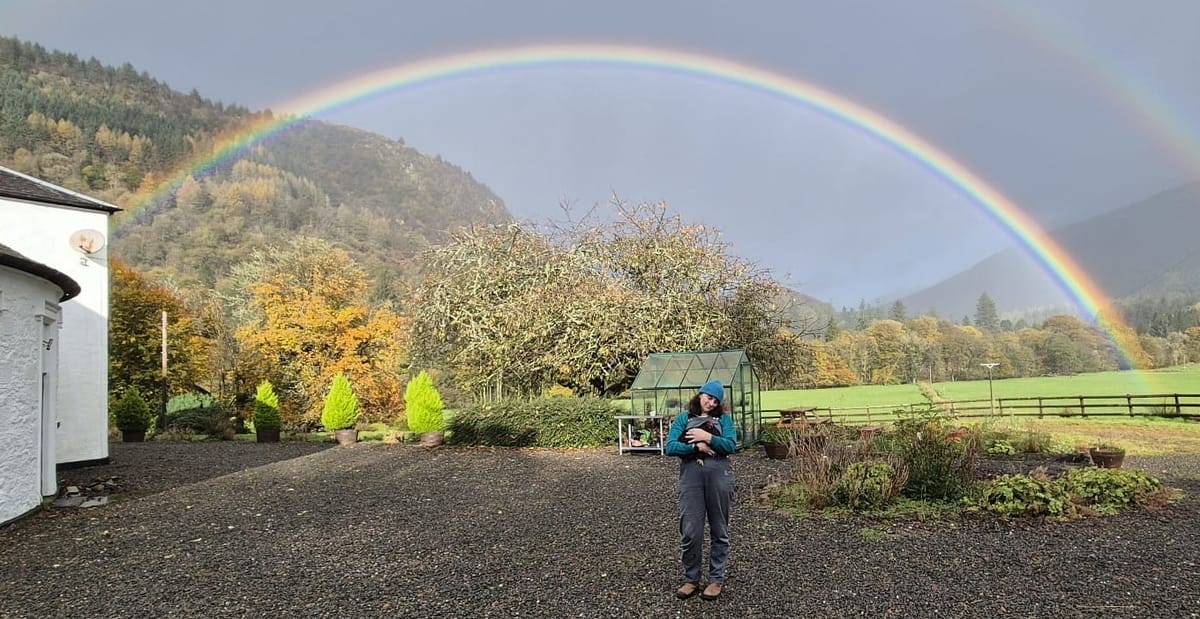
Missy was a chicken, and as the headline gives away, she died. There is nothing dramatic in this blog post and there is a certain cultural taboo in talking about the death of something so small in sincere terms. But dealing with the human discomfort around a chicken on the brink of death was a significant part of my experience of arriving fully at Glenshellish, so I do want to write about it.
Writing about a chickens death feels strange. Especially here at Glenshellish, a place that used to be a working dairy farm, where animal death was simply par for the course. There is, I think, a difference between people who live close to the production of food, who grew up on farms or with hunting, and people who find the thought of an animal dying uncomfortable. Someone at ease with farm death might point to the dissonance of eating meat while being disturbed by the idea of death. At the same time, I know for a fact that even people who regularly dispatch their own animals will still have emotional responses to particular individuals.
I suppose I have a foot in both camps. I mostly eat venison or beef where I know the exact origin, but I still eat dairy, which relies on systems deeply entangled with industrial killing. I believe there is a way to give an animal a good life and a good death. I cannot yet pretend that I am comfortable being the source of that death myself.
This post is about encountering death here in our first year at Glenshellish, as newcomers to farm life.
It was May. After months of truly miserable rain, the weather was finally turning.
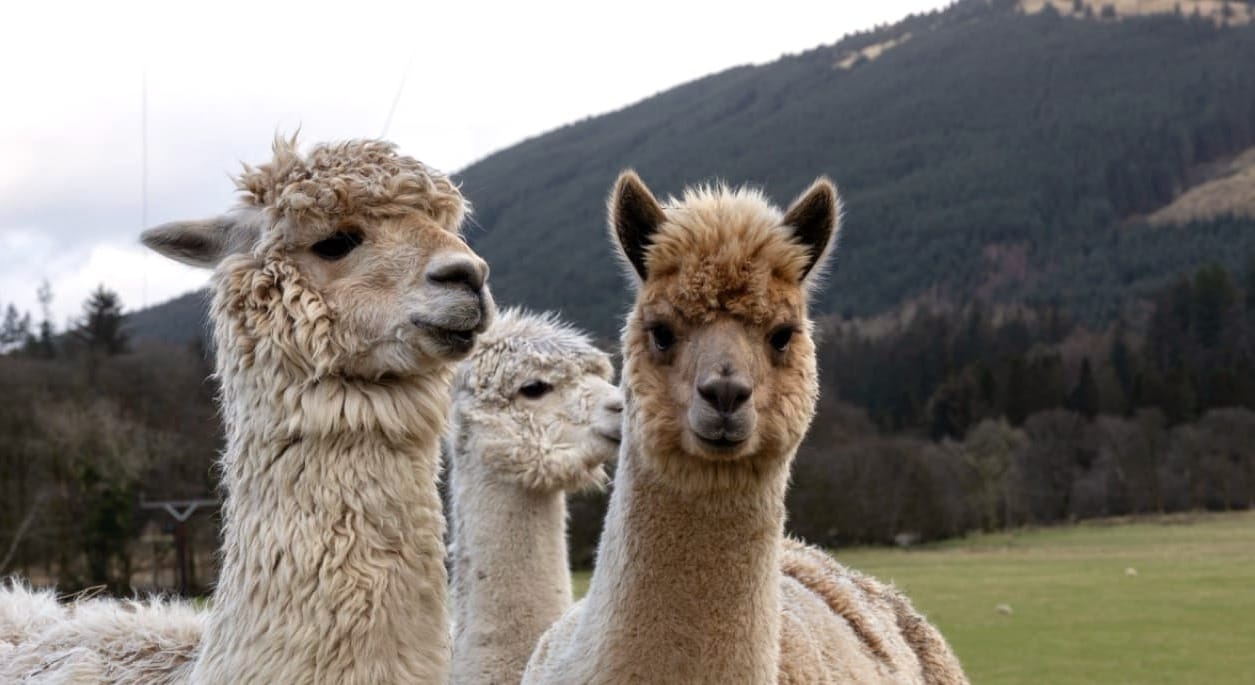
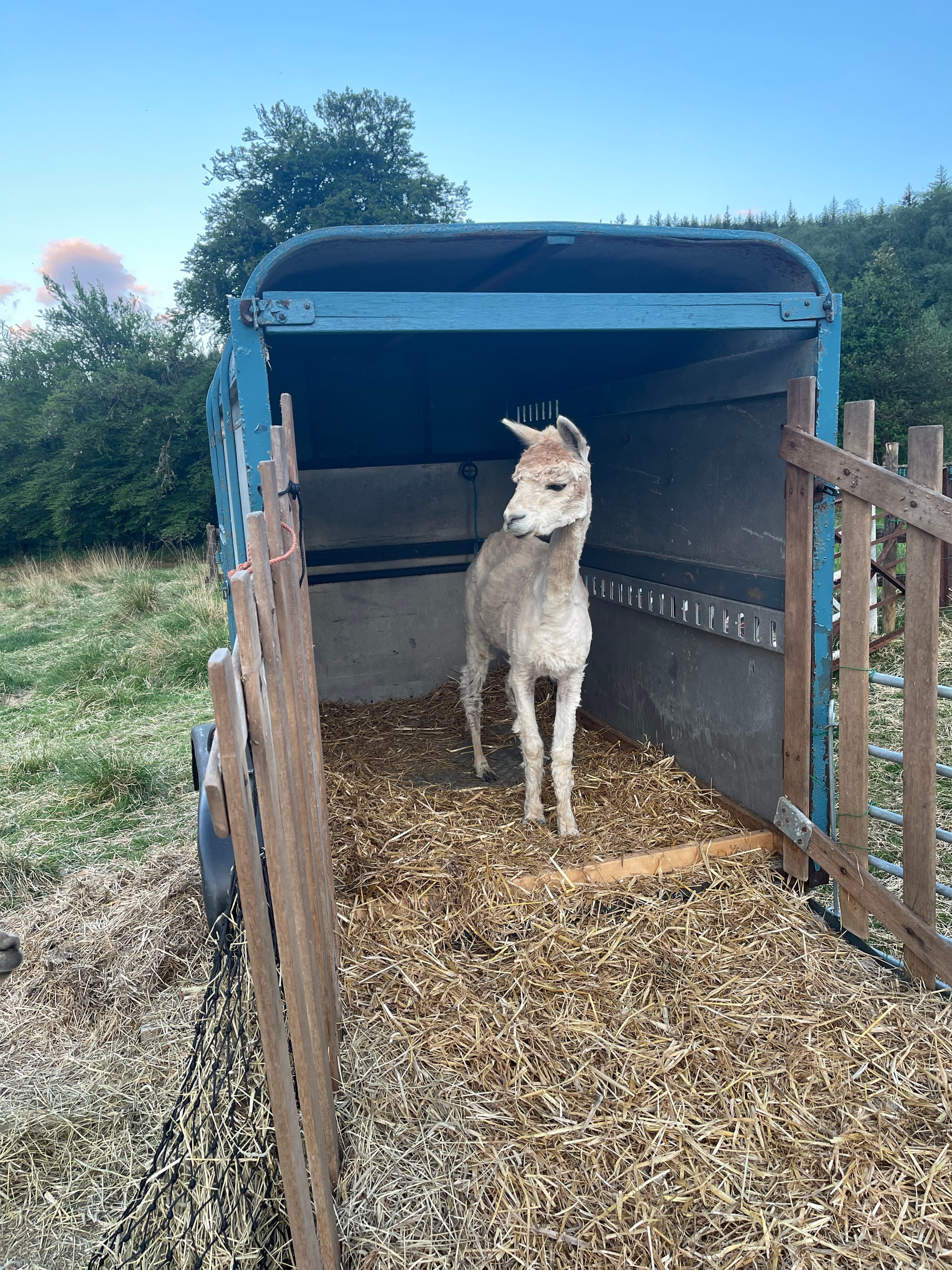
We had had the alpacas for two or three months. The four of them were doing well, except Deira had started slowing down. For a couple of days she lay down more than usual. Then she began eating less.
I was spending a night in Edinburgh when James called to say she did not want to get up to eat anymore. I rang the vet. I want to say very clearly that our local vet has been extraordinary with all our animals. They were overwhelmed with call-outs that day and asked whether someone could come the following morning instead of that night. I said yes.
Deira passed away during the night.
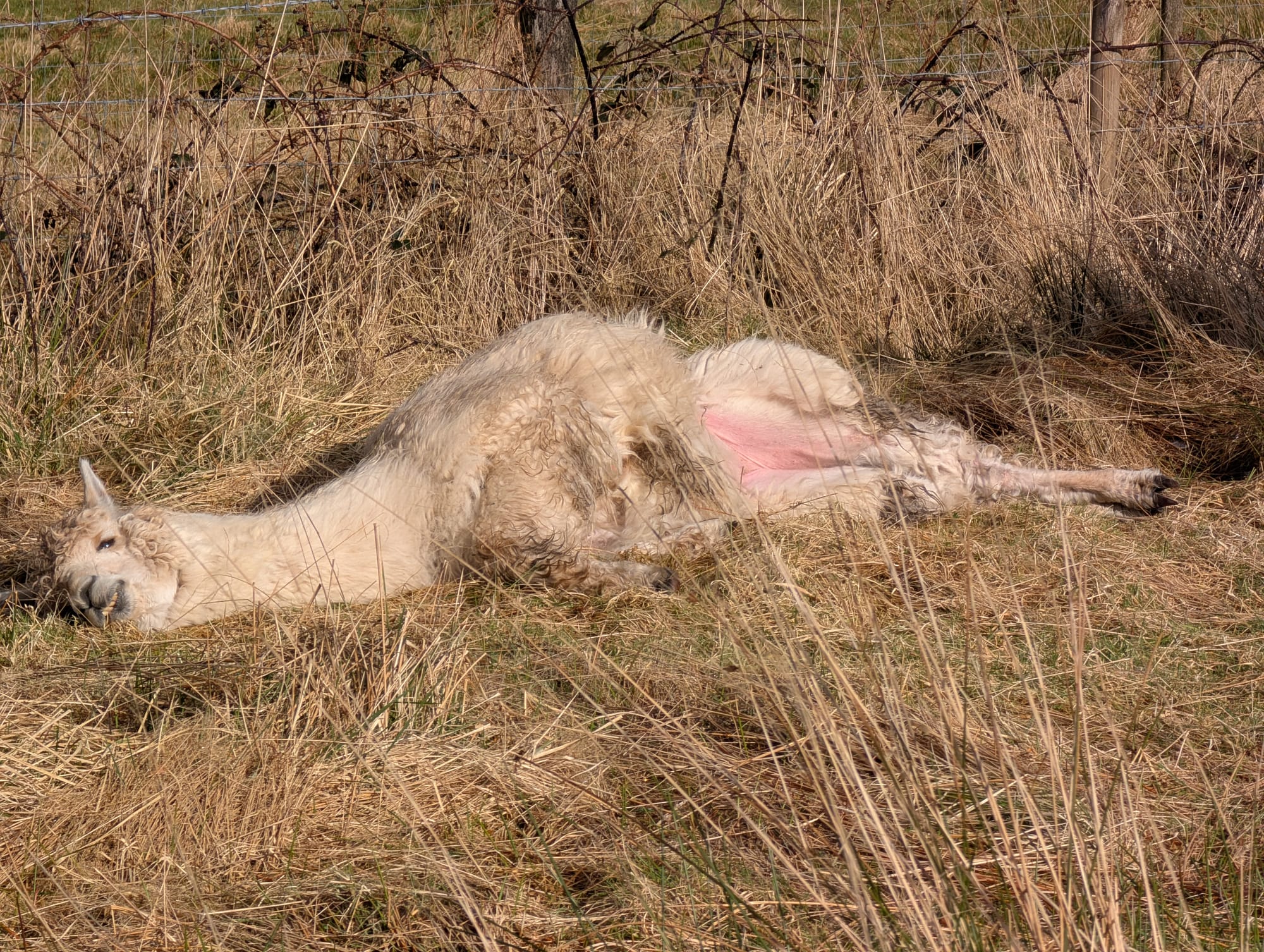
It was sad. She was a lovely alpaca, and I felt guilty for not insisting the vet come sooner. But she was very old. The shearer who had been out a few weeks earlier had been surprised she was still alive. And she had what I can only describe as a beautiful death. She fell asleep surrounded by the other alpacas, all of them tucked in close around her, on soft straw with food and water within neck’s reach.
It was pretty swift and it was gentle.
We buried her in her favourite sunbathing spot in the alpaca field so she could keep hanging out with her friends. In some poetic way, burying her body in Glenshellish soil rooted us here too.
With Missy, things were very different.
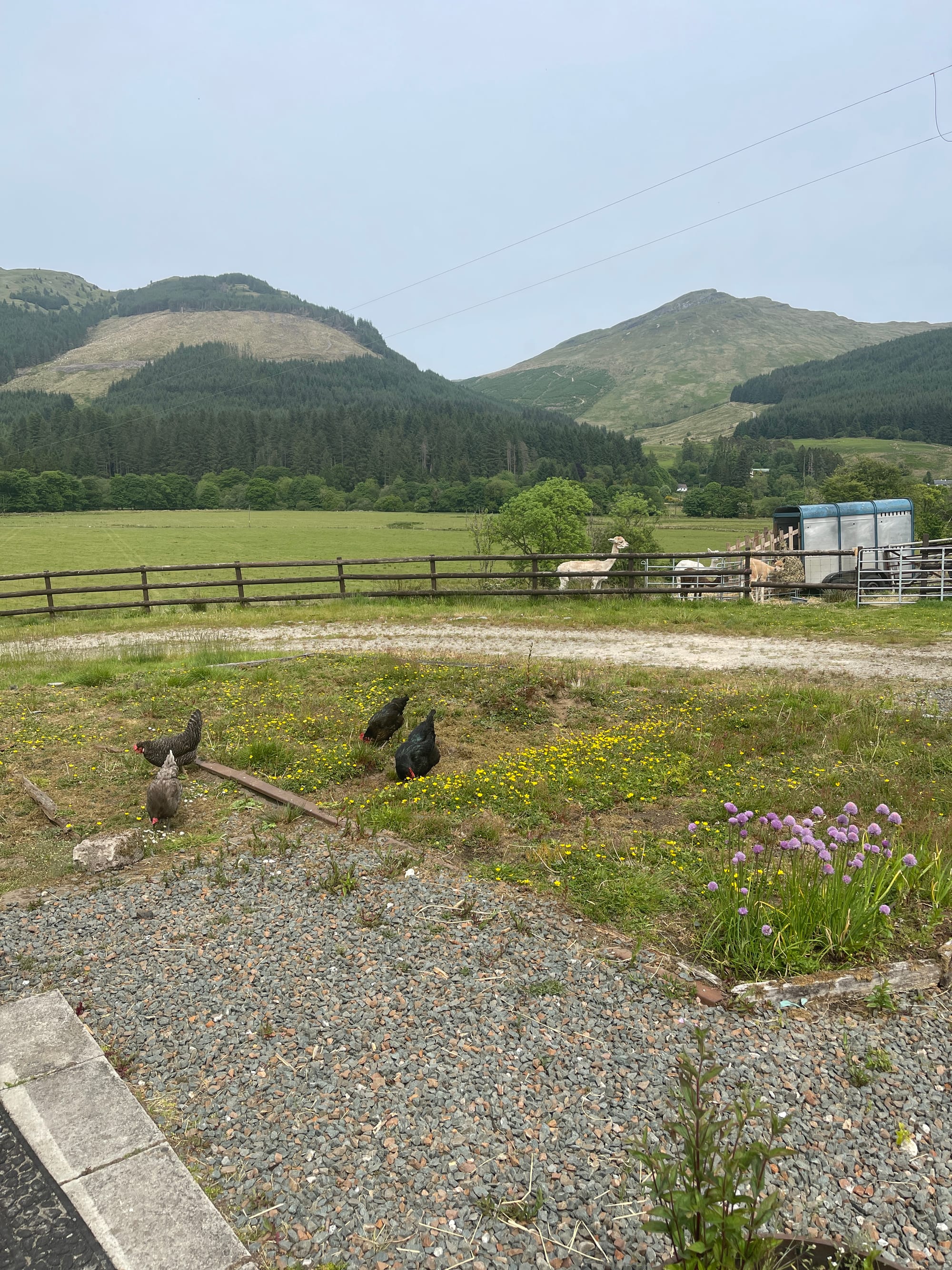
Missy was one of the four chickens James and I got five years before moving to Glenshellish. Of those four, only she and her sister Schmeckls made it all the way west with us. Missy was never one of the frantic or aggressive hens. She was steady and present. Admittedly, and it’s perhaps good to bear that in mind as you read on, she was my favourite chicken (unlike with children, with chickens it’s sort of ok to have favourites).
In spring she slowed down noticeably and developed a slight limp. With sadness, because she was definitely a pet and not “just a chicken,” we braced ourselves. We took photographs of her sunbathing in the heather. We sat with her and fed her treats.
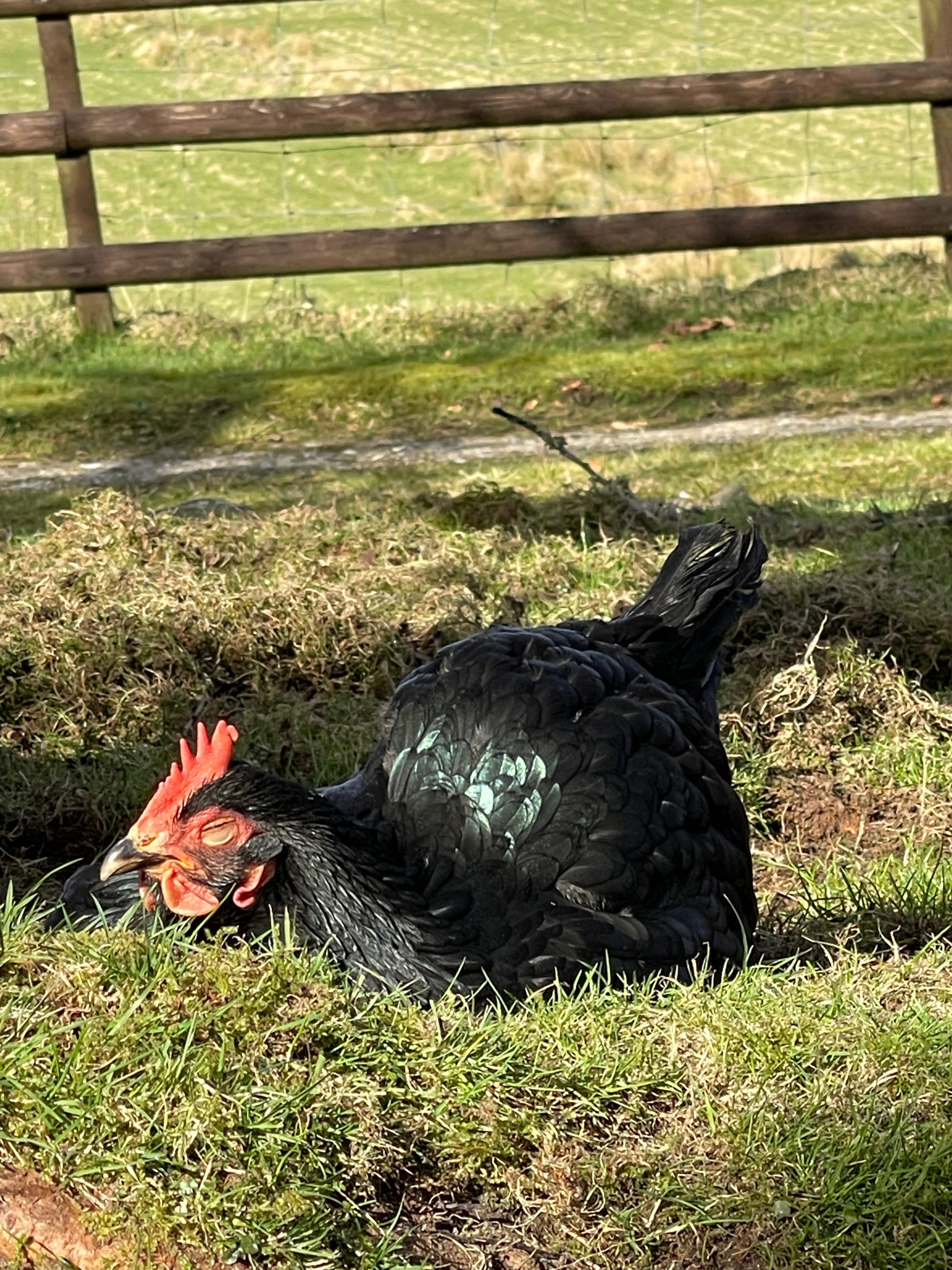
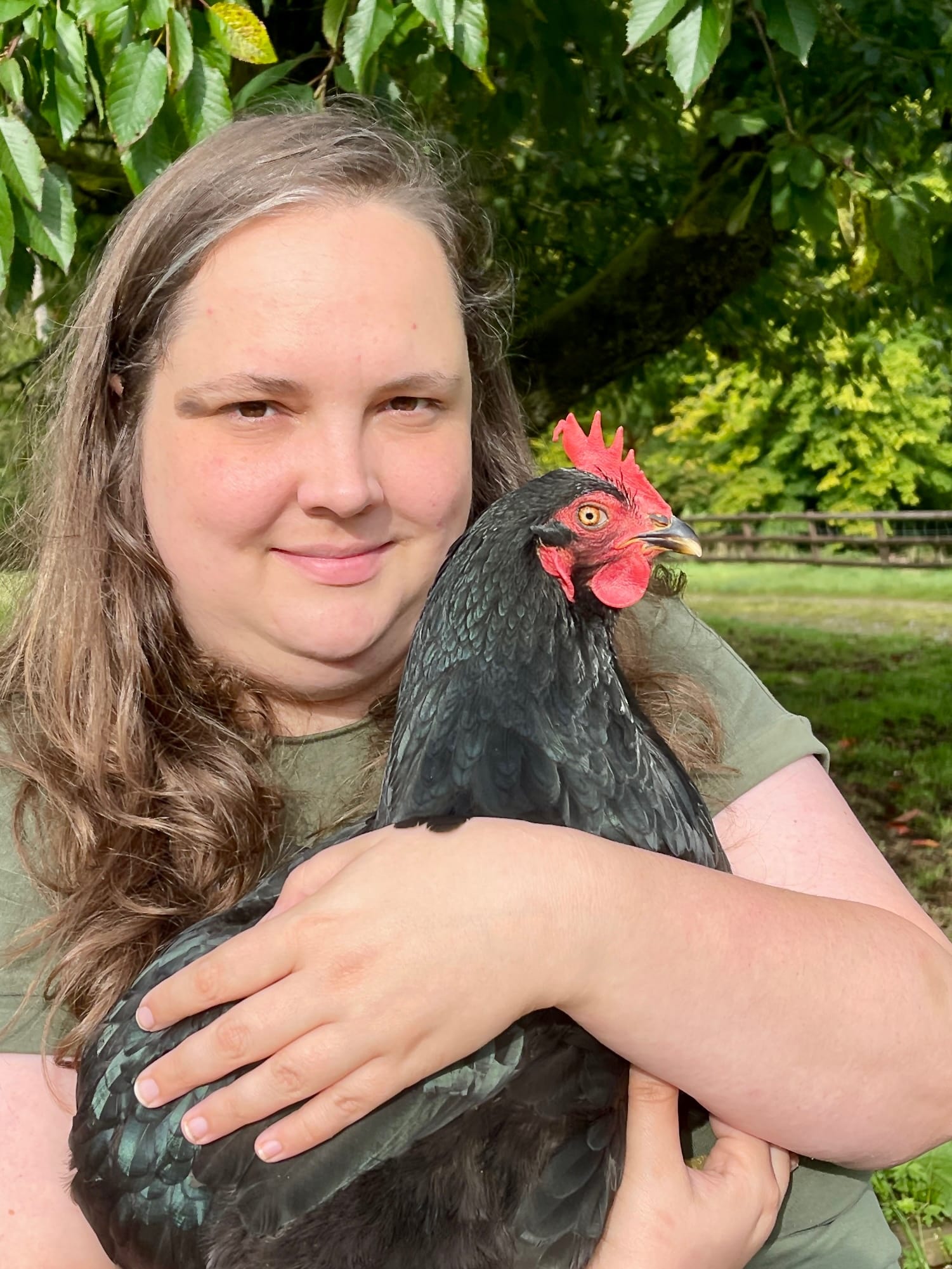
And then somehow she got better.
She had a wild, beautiful summer. The kind of life we had always imagined for our chickens.
In late August one of the WWOOFers found me to say Missy was walking funny. She had kept chickens before and said it with the tone of someone who knows that a wonky walk can mean the end of the road.
We took Missy to the vet and came home with painkillers and antibiotics, along with instructions on how to inject them. For anyone thinking, “but it’s just a chicken,” I am aware of that stance. I have close friends who look at this level of effort and let me know politely that I’m insane.
But, reader, I had not even begun yet...
We set up a medication routine. She did improve for a while. After a month or so, though, the symptoms crept back. She had been on painkillers almost continuously and was clearly losing weight. It began to feel as though the issue was less a specific illness and more that she did not have the strength to get up and do chicken things, including eating. The days were getting colder and she was moulting.
So we escalated.
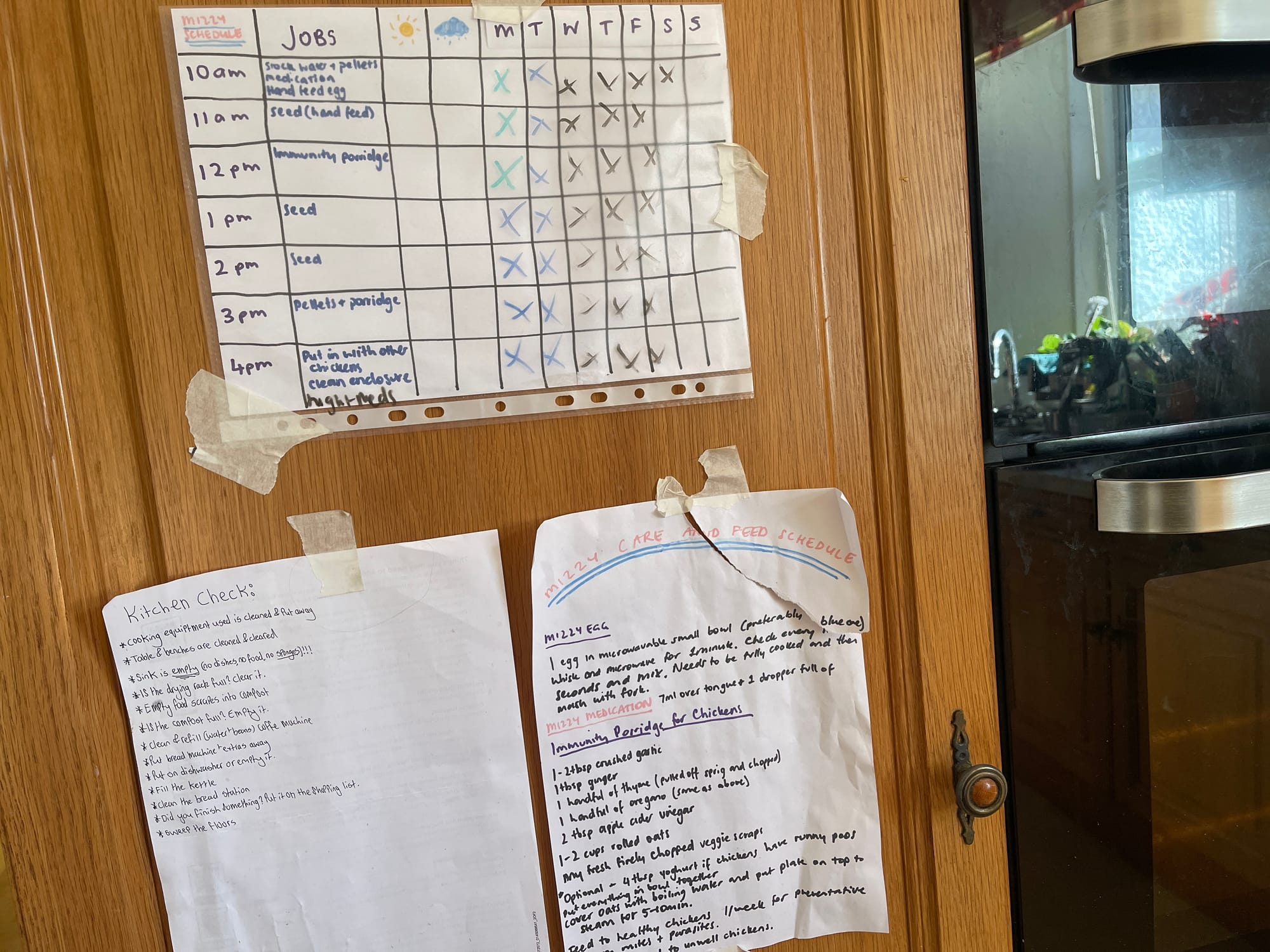
We created a new schedule involving hourly check-ins. Missy was hand-fed scrambled eggs, immunity porridge, peanut butter and fresh grass. We were lucky that the WWOOFers who were with us at the time had lots of chicken experience and were able to look after Missy when I could not. Zoe, in particular, became Missy’s personal carer for several days, although many others helped too.
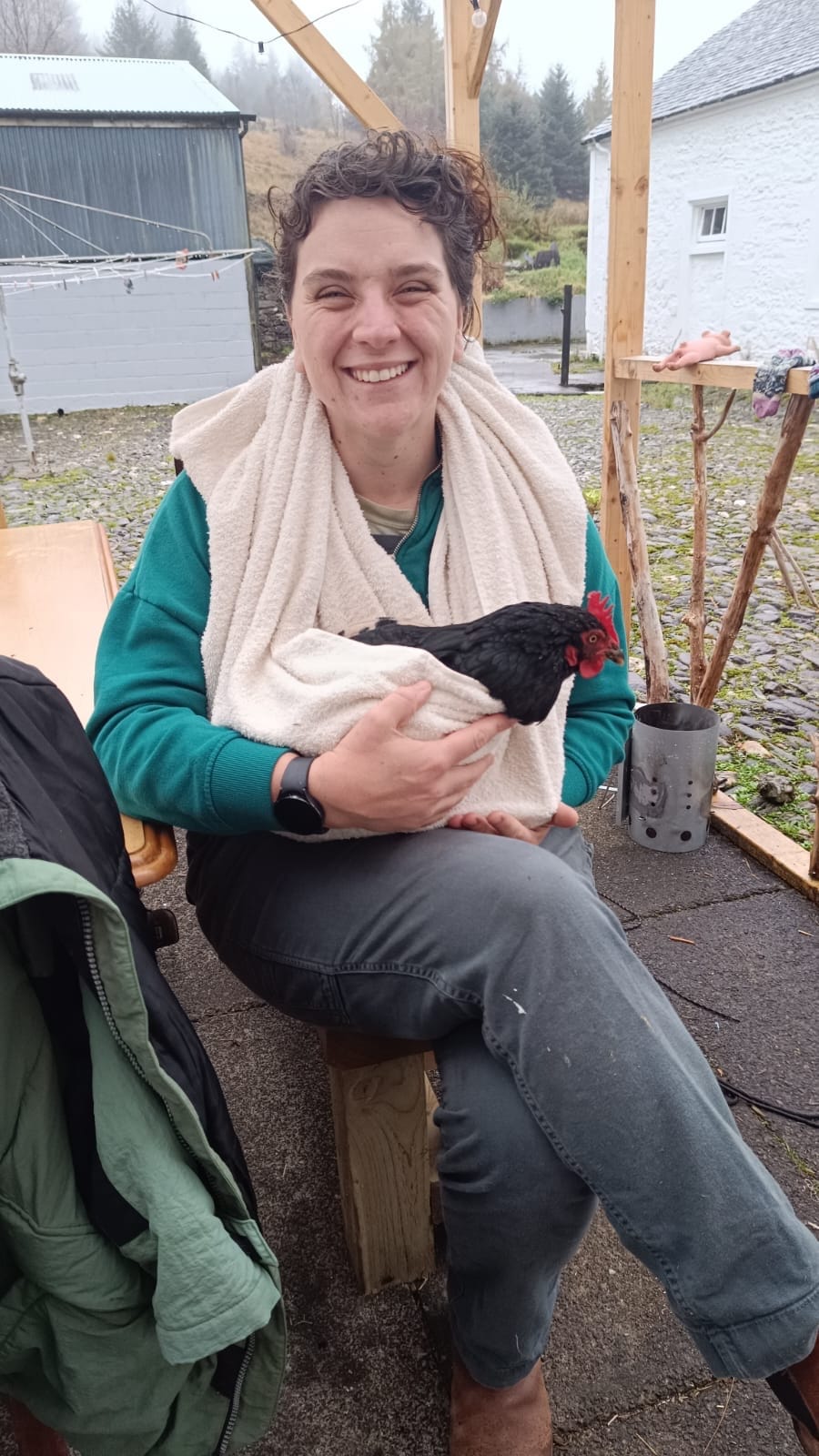
Eventually there came a day when it felt as though we had reached the end of the line. It was a difficult decision because I very much don't want to end an animal's life out of convenience. But when she could no longer walk at all, it felt like the balance had tipped. I called the vet to arrange euthanasia. The earliest appointment was five days away, so I booked it.
But I also began to wonder whether it would be better, or perhaps my moral obligation, to dispatch her myself. Her quality of life was poor. Even sitting in Zoe’s lap being hand-fed, she would sometimes drift off mid-bite. Part of me wondered if it was wrong to prolong this state merely for the convenience of having the vet do it. I have helped a friend who raises chickens for meat on slaughter days. I know how to do it properly and swiftly so that the chicken doesn’t even see it coming.
Alas, I did not.
Instead, I went back to the vet and asked for more antibiotics to make her last days more bearable. The vet raised an eyebrow and said there was already a lot of antibiotics in this chicken, but if she was going to be put down anyway, they would prescribe.
We made yet another schedule, now focused purely on giving her the best final days possible. The night before her appointment I injected another dose and thought to myself that the only way I would cancel was if she somehow walked the next morning.
And the next morning Zoe came running.
“Missy is walking.”
She had walked herself out of the chicken house.
Incredulous, we cancelled the appointment. The vet suggested an implant in case the issue was related to ovulation. The other theory was cancer. We tried it. She scratched. She ate fresh grass, her favourite. She sunbathed. The weather lifted. It felt like she was taking a victory lap.
A few weeks later her condition deteriorated again.
But this time something shifted. Perhaps we were worn out from constant vigilance or perhaps the situation felt clearer. Perhaps it was simply that she had been given so much love and so many beautiful extra days that the edge of panic had softened.
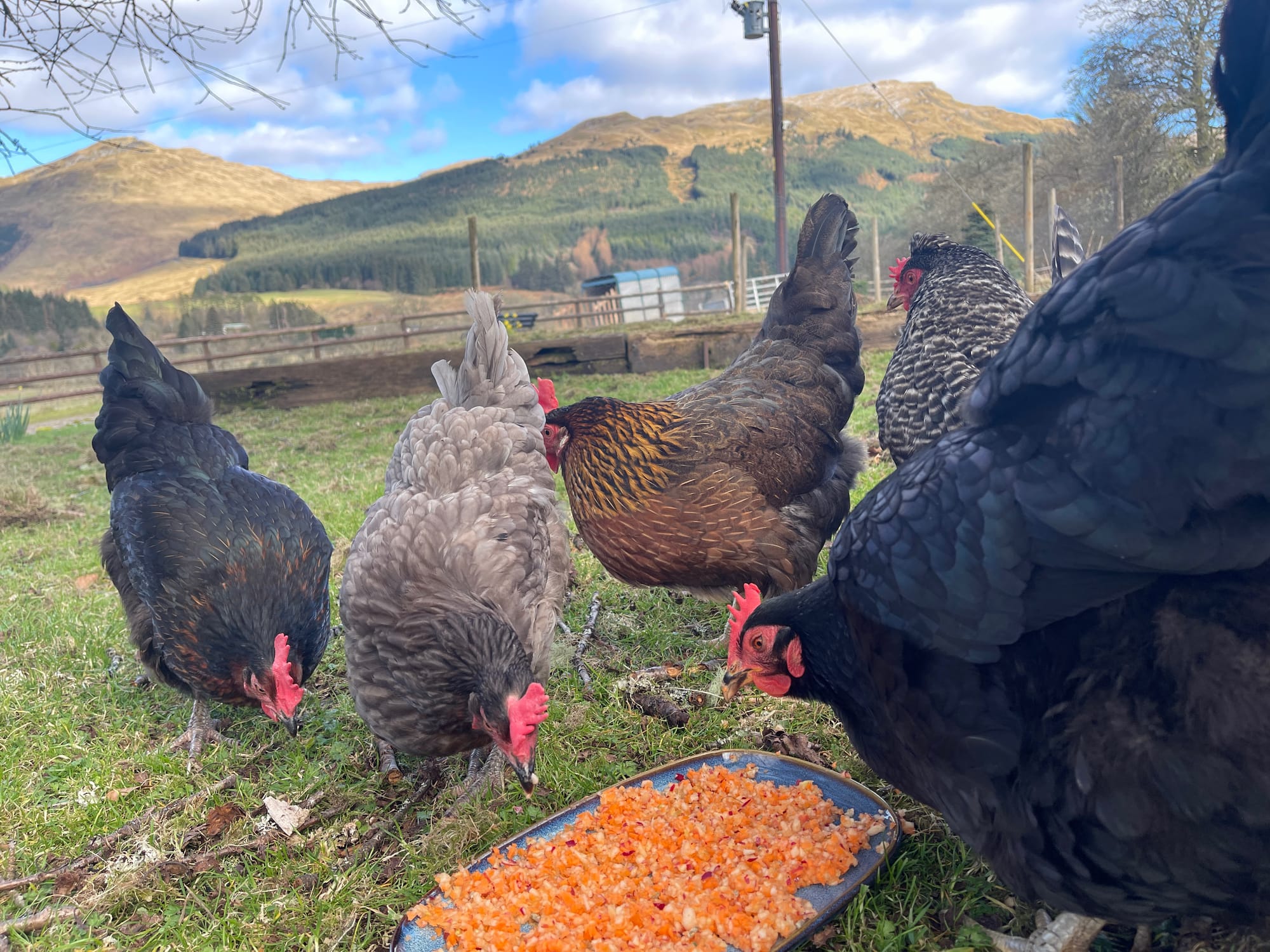
We made another appointment. Instead of isolating her for special treatment, we let her be with the flock. Instead of private treat sessions we held feeding frenzies for everyone. It felt less desperate and more celebratory.
There is a lesson about letting go somewhere in all of that. About walking the tightrope between not ending a life prematurely out of convenience and not clinging to it out of fear of grief. I did not imagine the lengths I would go to for a chicken. But somehow it feels like through this one particular death I was processing and coming to terms with the inevitability of death in a place like this. I don't know if I'll be able to grieve every life that passes through here with the same intensity as I did with Missy
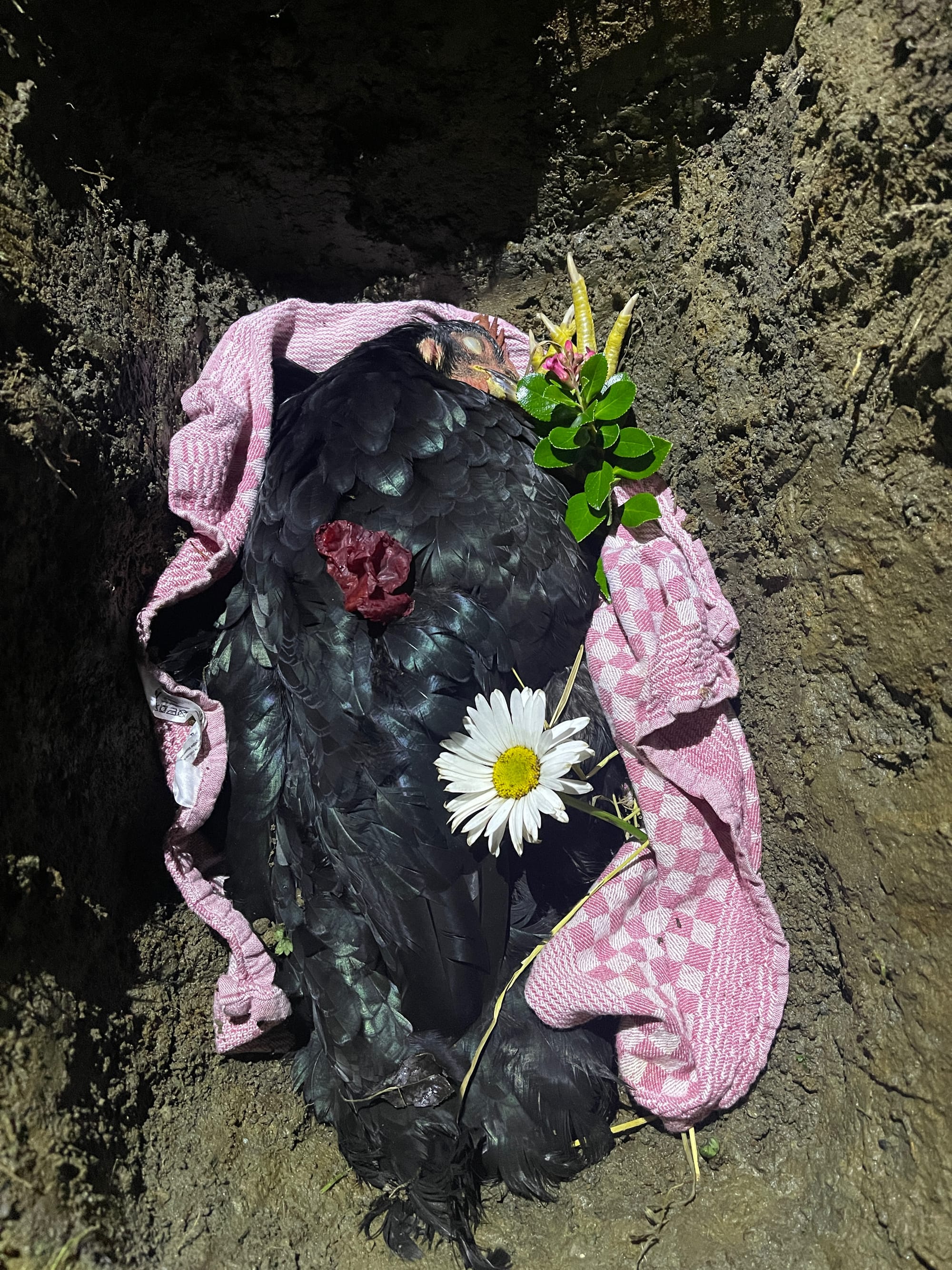
We buried her in the garden. this was Missy's obituary:
Missy was a great chicken.
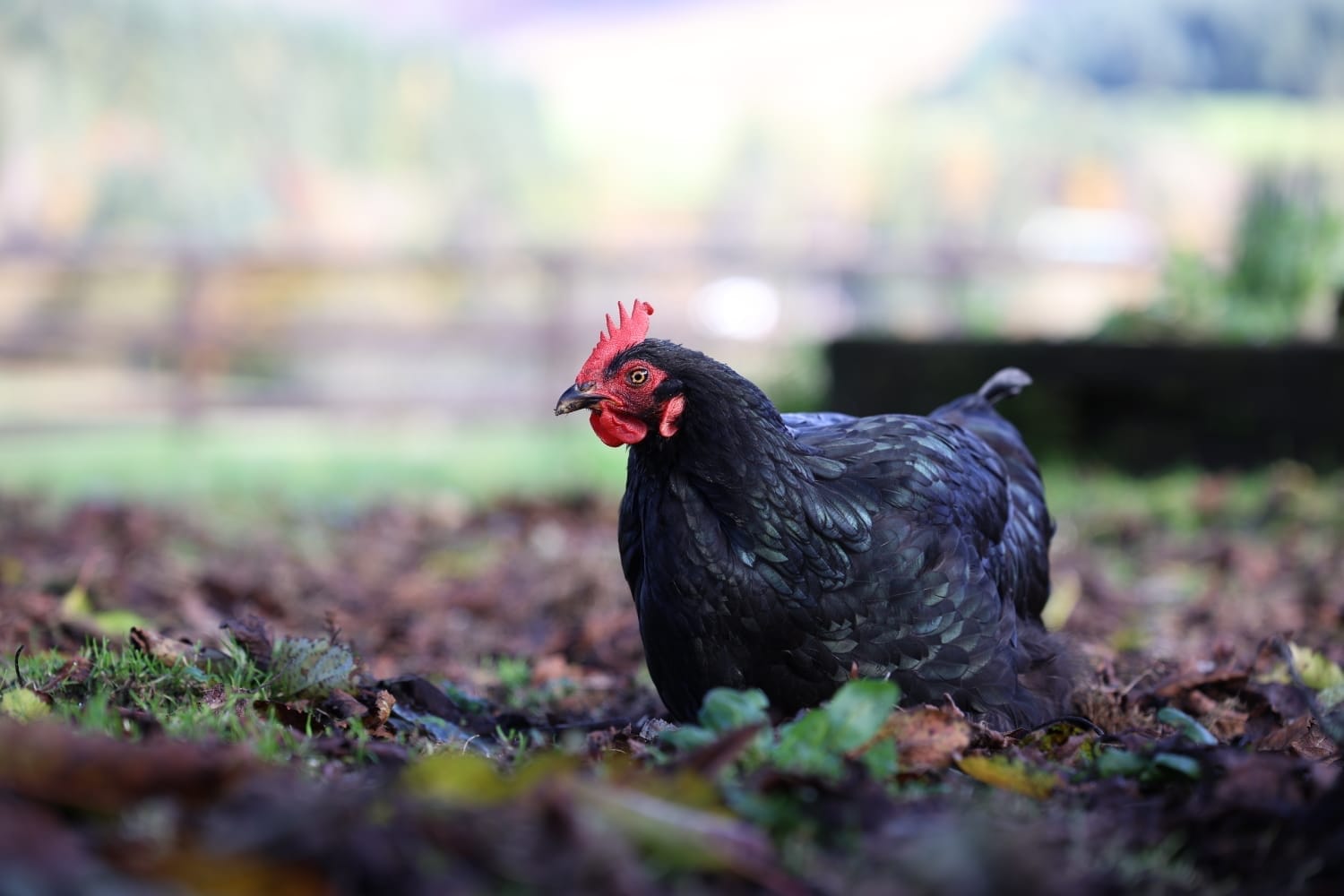
In the last few months she’s been struggling to grow her signature iridescent green black plumage but back in her hay day a vet once famously remarked that she was the most beautiful chicken he had ever seen.
She was very gentle and patient - apart from that one time when I thought she might have pecked out Rory’s eye. She never pushed the other chickens away from the food even though she was so much bigger than them for most of her life. In fact, she was so gentle with treats, you often had to make sure she got her fair share during garden breakfast feeding frenzies.
Missy loved to be part of the chicken community. She let Schmeckls sleep under her wings to keep warm in the old chicken house when it got cold. And for her last couple of nights she chose to sleep near her friends underneath the roost even though she couldn’t quite roost anymore and other more comfortable options were available.
She was a testimony to how much love people , many of whom didn’t even know how her, can pour into a chicken and I am so grateful to everyone who helped make her last few months a beautiful and indulgent farewell tour.
She loved grass, and seeds, and being outside. She was with us since the beginning and I’m so glad she made it all the way to Glenshellish, that she can be laid to rest here so her spirit can forever sunbathe in the grass and our love for her can nourish the ground that sustains our life.
She will be missed by Schmeckls and the other chickens and by us.
Goodbye Missy